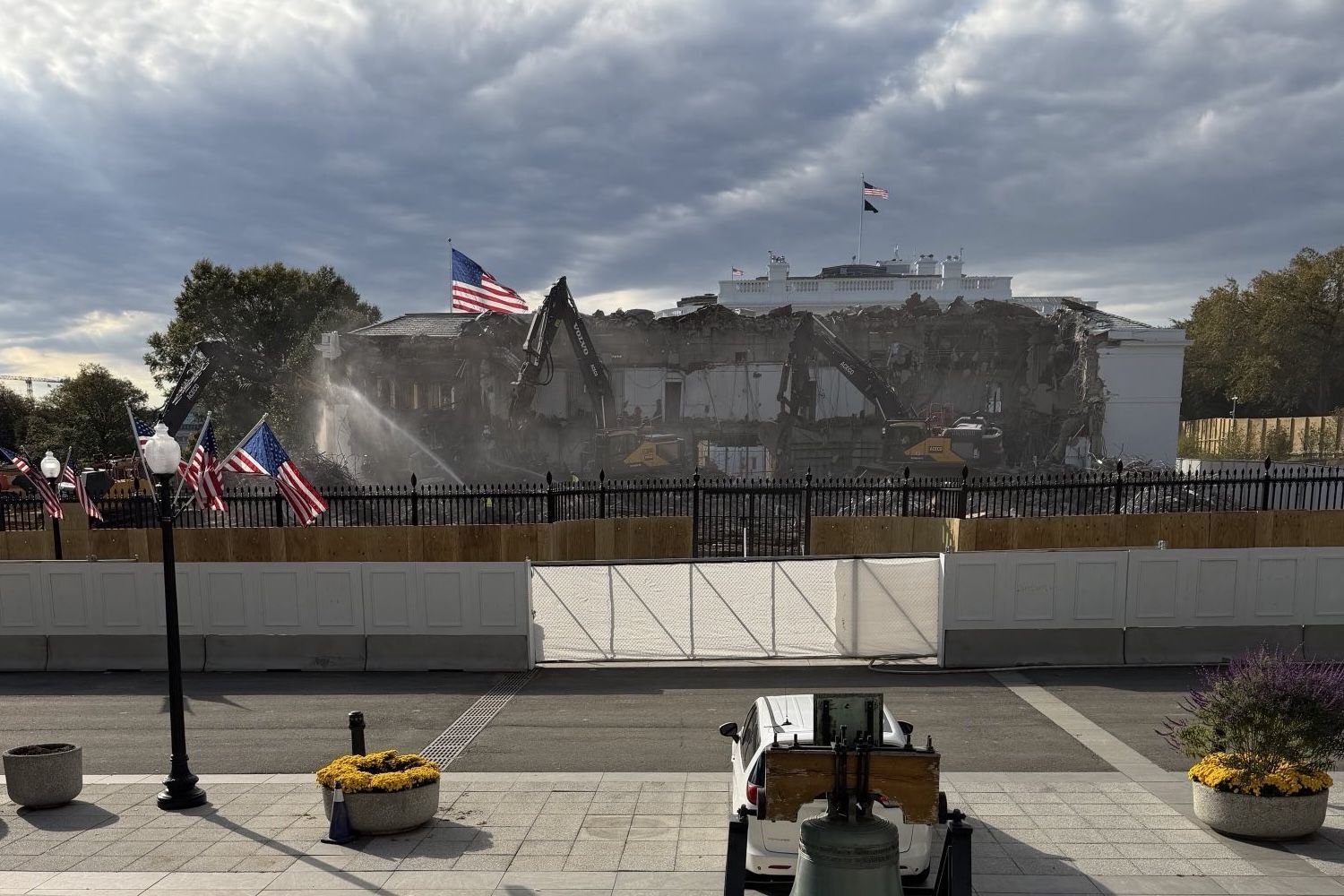
If enacted, the lame-duck industrial-expediting bill BAAJA (S. 5653) will provide blanket permission for Trump’s destructive wishes in our nation’s capital. In BAAJA Follies, Hill Heat reviews several of the major legal battles against that takeover, and the implications of BAAJA’s possible passage during the lame-duck session.
Lemmon v. Trump and County Board of Arlington v. NPS and District of Columbia v. NPS
If BAAJA passes, most of the legal avenues for opponents of the construction of the Trump arch will be narrowed or shut down.
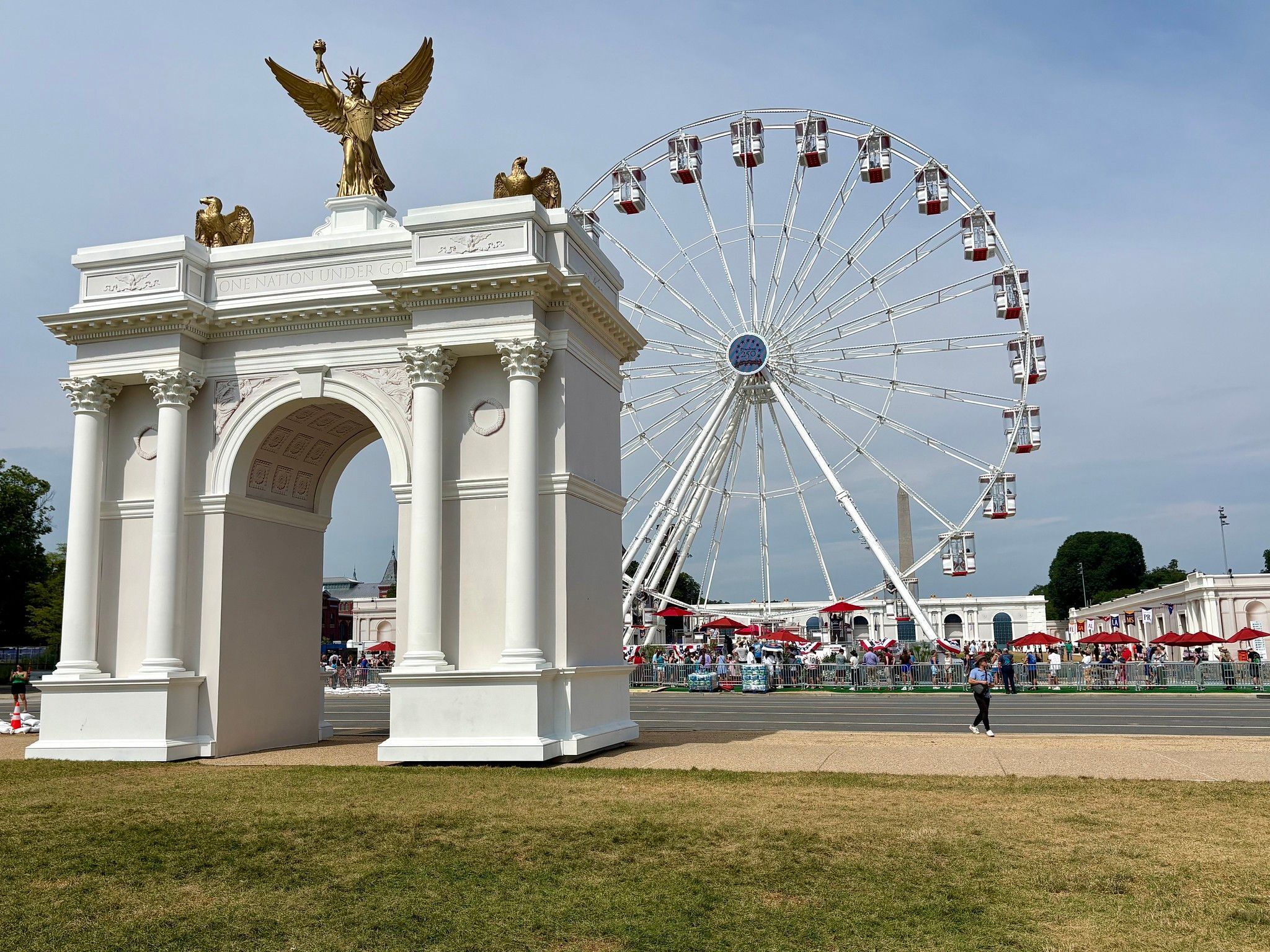
In October 2025, Trump announced his plans for a gargantuan and garish “triumphal arch” blocking the view of the Lincoln Memorial from Arlington National Cemetery. He has since announced it will also serve as a new, mechanized military outpost with drones and snipers, a claim confirmed in October 2026 in affadavits by Secretary of Homeland Security Markwayne Mullin and Secretary of Defense Pete Hegseth.
Represented by Public Citizen, three Vietnam veterans and an architectural historian brought suit in February against the arch’s construction, citing the Commemorative Works Act, NEPA, and the National Historic Preservation Act (NHPA).
In April, Trump’s CFA voted for the arch.
In June, the National Parks Service issued a rushed environmental impact assessment under NEPA, with a finding of “no significant impact”; they then avoided soliciting comment on the environmental assessment.
Also in June, they published an assessment of effect on historic sites under NHPA’s Section 106, finding dozens of adverse effects on the sanctity of those sites, but then invited only ten days of public comment. In July, they reopened twenty more days of public comment after complaints from the District of Columbia Historic Preservation Office and the Virginia Department of Historic Resources. In August, after receiving overwhelmingly negative comments, NPS issued a revised Section 106 statement finding even more adverse effects. In September, they issued a proposed historic-preservation agreement, admitting “adverse effects cannot be fully avoided” but that “the proposed location at Memorial Circle is central to the undertaking” and thus no alternative course of action could be considered.
Meanwhile, Secretary Burgum posted renderings of the arch and announced “excavation work” would begin mid-September, so plaintiffs filed for a restraining order, which was granted.
Sen. Martin Heinrich (D-N.M.)—as he was negotiating legislation to kill section 106 of the NHPA—led a September 22 letter to Interior Secretary Doug Burgum against the Arch, citing “section 106 of the National Historic Preservation Act,” which requires the government to “avoid, minimize, or mitigate” adverse harm to historic sites. The letter was co-signed by U.S. Senators Angus King (I-Maine), Alex Padilla (D-Calif.), Ron Wyden (D-Ore.), Mazie Hirono (D-Hawaii), and Chris Van Hollen (D-Md.).